AI Marketing Agent Insights for Modern Growth Teams
MeetLyra Journal covers AI marketing agents, SEO automation, content systems, and the shift from manual marketing execution to autonomous workflows.
MeetLyra Journal covers AI marketing agents, SEO automation, content systems, and the shift from manual marketing execution to autonomous workflows.


A practical, step-by-step guide for startups and lean teams to conduct effective SEO keyword research that drives traffic, leads, and sustainable growth..
SEO keyword research is the process of finding and analyzing the terms people use to search for information, products, and services in search engines like Google. The goal isn’t just to find popular words; it’s to understand your customers’ language so you can create content and build products that directly meet their needs. For founders, mastering this is a foundational step in building scalable, organic growth and is a core component of effective marketing automation for startups.
Without solid keyword research, you’re creating content in the dark. You might write what you think your audience wants, but you won’t know what they’re actually searching for. This guide provides a practical, step-by-step process for startups and lean teams to conduct effective SEO keyword research that drives traffic and conversions.
At its core, SEO keyword research is market research for the digital age. It’s about identifying the specific queries your target audience types into search engines when they’re trying to solve a problem that your product or service addresses.
Many teams make the mistake of focusing solely on search volume—the number of times a keyword is searched per month. While important, it’s only one piece of the puzzle. A truly effective strategy balances three key elements:
The sweet spot is finding keywords that are highly relevant, have manageable competition, and possess a reasonable search volume. This is where understanding user intent becomes critical.
This workflow follows Google Search Central guidance: useful, original, people-first content matters more than whether AI helped create the first draft.
Search intent (or user intent) is the ‘why’ behind a search query. Understanding this helps you create content that satisfies the user’s needs, which is a major ranking factor for Google. There are four primary types of search intent:
Ordered list
Matching your content to the dominant search intent for a keyword is non-negotiable. If you write a blog post for a transactional keyword, you’ll struggle to rank against product and pricing pages.
seo keyword research works best when it turns strategy into a repeatable publishing system, not just another drafting shortcut.
SEO Machine quality gate
Here is a repeatable framework for conducting keyword research that gets results, even with limited resources.
Seed keywords are the foundation of your research. They are the broad, primary terms that define your niche and product. Don’t overthink this step. Just list out the obvious terms.
Ask yourself:
For MeetLyra, our seed keywords might include: “marketing automation,” “ai marketing,” “content creation,” “seo automation,” and “autonomous agent.”
| Workflow | Manual SEO | Agentic SEO |
|---|---|---|
| Research | Spreadsheet-led and slow | Scored opportunities |
| Drafting | One-off briefs | Context-aware generation |
| Optimization | Manual plugin checks | Pre-publish quality gate |
Once you have your seed keywords, use keyword research tools to expand your list. These tools will help you discover long-tail keywords (longer, more specific phrases), questions people ask, and related terms you might have missed.
Plug your seed keywords into a tool like Google Keyword Planner or Ahrefs. Look for keyword ideas, related terms, and question-based queries. For example, the seed keyword “marketing automation” might expand into:
This step is about generating a large, comprehensive list of potential targets. We’ll filter it down in the next step.
Now you have a massive list. It’s time to analyze each keyword based on key metrics to determine its value and feasibility. The three most important metrics are:
Your goal is to find a balance. A keyword with 50,000 MSV and a KD of 95 is likely unattainable for a startup. A keyword with 200 MSV and a KD of 10 is a much better target. Focus on these low-difficulty, high-relevance opportunities first to build momentum.
It automates opportunity research, content creation, on-page optimization, publishing preparation, and monitoring.
No. It handles repeatable execution so humans can focus on positioning, evidence, and quality control.
Effective content strategy guides users from awareness to purchase. Map your qualified keywords to the different stages of the buyer’s journey:
This mapping ensures you create a full-funnel content experience that nurtures leads, rather than just attracting informational traffic.
Finally, don’t treat keywords as individual targets. Group related keywords into topic clusters. A topic cluster consists of a central “pillar” page covering a broad topic and multiple “cluster” pages that cover related subtopics in more detail.
For example, your pillar page might target “marketing automation.” Your cluster pages could target “email marketing automation,” “social media automation,” and “zapier marketing workflows.” All cluster pages link back to the pillar page, signaling to Google that you have deep expertise on the topic.
This approach helps you build topical authority, which is far more powerful than ranking for a few random keywords. For more on this, see our guide on advanced topic clustering tips.
While strategy is paramount, the right tools make the process faster and more data-driven. Here are a few essential tools for startups.
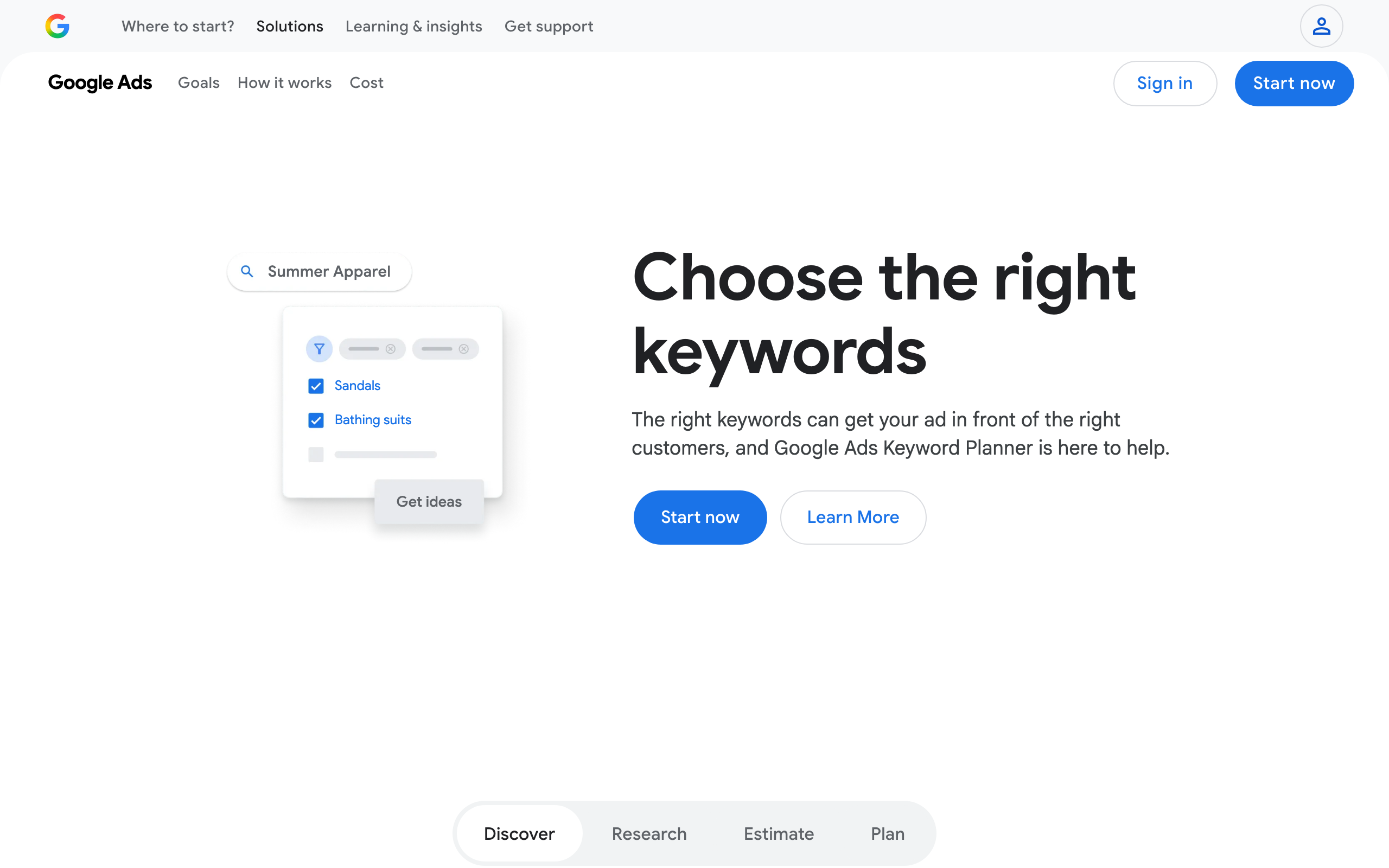
Google Keyword Planner: The original keyword tool. It provides search volume ranges and CPC data directly from Google. You need a Google Ads account to use it, but you don’t have to run ads.
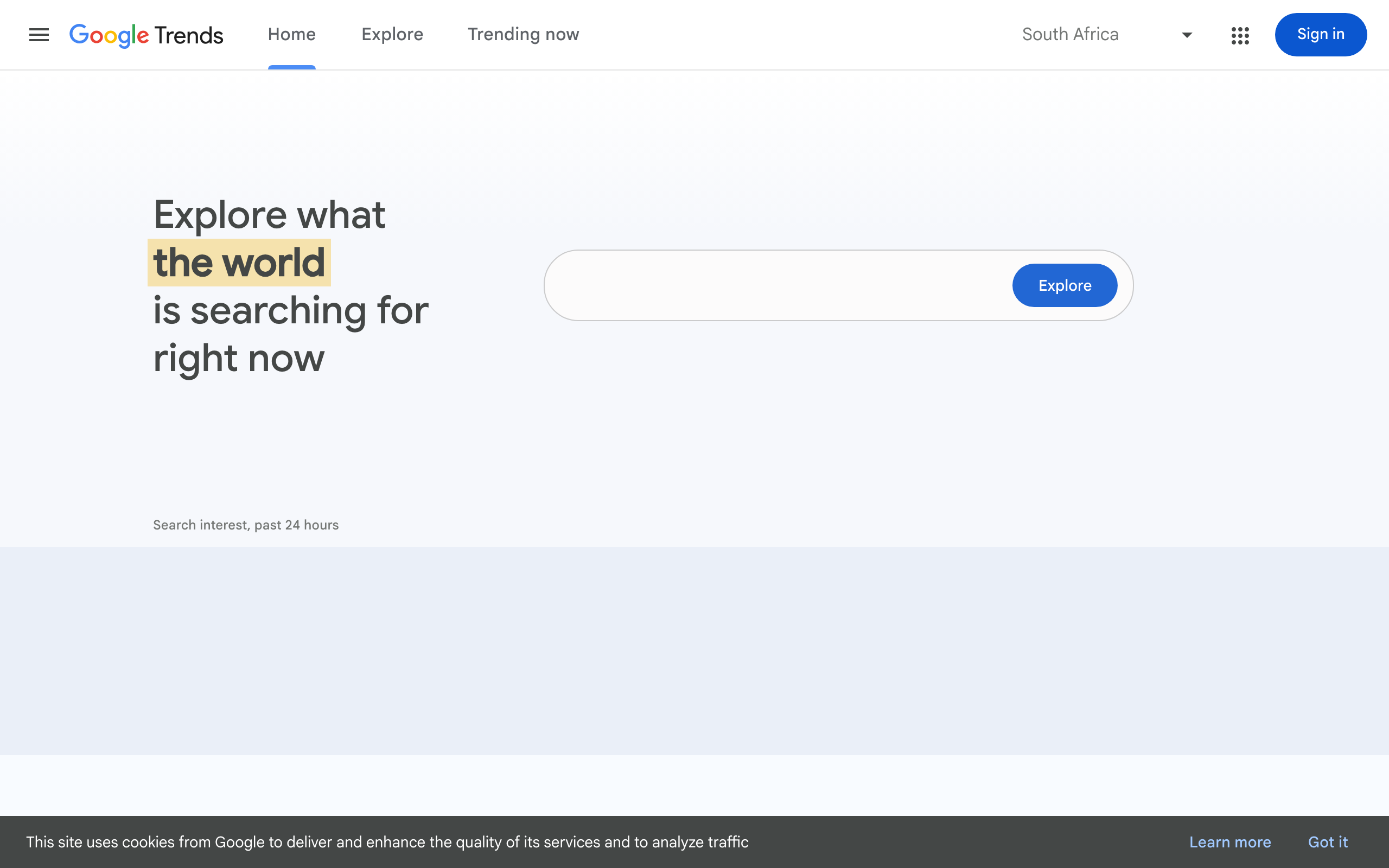
Google Trends: Excellent for comparing the relative popularity of keywords over time and identifying seasonal trends. This helps you understand if a topic’s interest is growing or declining.
AnswerThePublic: Visualizes the questions, prepositions, and comparisons people search for around your keyword. It’s a goldmine for finding long-tail and question-based keywords for your content.
Ahrefs: An industry-standard, all-in-one SEO tool. Its Keyword Explorer is best-in-class for providing accurate keyword difficulty scores, search volumes, and competitor analysis. It’s a premium tool, but its data is unparalleled.

Semrush: Another powerful SEO suite that offers robust keyword research, competitor analysis, and rank tracking features. It’s a direct competitor to Ahrefs with a slightly different feature set.
Moz Keyword Explorer: Known for its user-friendly interface and unique metrics like “Priority Score,” which blends volume, difficulty, and organic CTR to help you pick the best targets.
Modern SEO is moving away from a strict focus on individual keywords and towards topical authority. Google’s algorithms, like BERT and MUM, are designed to understand the relationships between concepts and the intent behind a search.
This is called semantic SEO. It means that instead of optimizing a page for one keyword, you optimize it for a whole topic. You do this by covering the subject comprehensively and including related entities, subtopics, and LSI (Latent Semantic Indexing) keywords.
The topic cluster model is the practical application of semantic SEO. By creating a well-structured hub of content around a core topic, you demonstrate your expertise to Google and users alike, making it easier to rank for all the related keywords within that topic.
The 5-step process outlined above is effective, but it’s also manual and time-consuming. For lean startups, the hours spent in spreadsheets and SEO tools could be spent on product development or talking to customers.
This is where autonomous AI agents are changing the game. An AI marketing agent can automate the entire SEO keyword research workflow. Instead of you manually performing each step, you provide the agent with your business goals, target audience, and seed topics.
The agent can then:
This transforms keyword research from a tedious task into a strategic, automated system. It allows founders to build an autonomous SEO content engine that consistently identifies high-value topics without the manual overhead.
At MeetLyra, we’re building autonomous marketing agents to do exactly this. If you want to spend less time on manual research and more time on strategic growth, join the private beta waitlist to get early access.
You should conduct comprehensive keyword research when you first launch your site and then revisit it quarterly or bi-annually. However, you should perform keyword research for every new piece of content you create to ensure it’s targeting the right terms.
For a new or small website, it’s best to target keywords with a KD score below 20 (on the Ahrefs scale). As your site builds authority, you can start targeting more competitive keywords. The key is to find a balance between difficulty and potential traffic.
You should focus on one primary keyword per page. However, a single page can and should rank for hundreds or even thousands of related long-tail variations and semantic keywords. Optimize for a topic, not just a single keyword.