AI Marketing Agent Insights for Modern Growth Teams
MeetLyra Journal covers AI marketing agents, SEO automation, content systems, and the shift from manual marketing execution to autonomous workflows.
MeetLyra Journal covers AI marketing agents, SEO automation, content systems, and the shift from manual marketing execution to autonomous workflows.


HubSpot is powerful but often too expensive and complex for lean teams. Explore the top 5 HubSpot Marketing Hub alternatives that offer better value for.
The best HubSpot Marketing Hub alternatives for agile startups are ActiveCampaign, Brevo, Mailchimp, ConvertKit, and GoHighLevel. These platforms offer robust marketing automation, CRM, and email marketing features without the enterprise-level cost and complexity associated with HubSpot. Many startups find HubSpot’s all-in-one suite to be overly expensive and difficult to manage, prompting the search for more focused, affordable, and user-friendly solutions that better fit a lean operational model.
HubSpot is undeniably a powerhouse in the marketing software space. However, its strength as an all-encompassing platform is also its primary weakness for smaller businesses. You might be paying for a dozen features you never use, navigating a complex interface, and locked into a pricing model that penalizes growth. This challenge is common for founders building their tech stack; we see a similar trend with teams looking for jasper pricing alternatives to find more targeted value. Consequently, this guide provides a detailed breakdown of the top alternatives to help you choose the right tool for your specific needs and budget.
While HubSpot often sets the standard for inbound marketing, several valid reasons drive startups and small businesses to seek alternatives. The decision usually isn’t about finding a single platform that does everything HubSpot does, but rather finding one that does what you need it to do more efficiently and affordably.
This workflow follows Google Search Central guidance: useful, original, people-first content matters more than whether AI helped create the first draft.
HubSpot’s pricing is a major barrier for many startups. The introductory tiers may seem reasonable, but the costs escalate quickly as your contact list grows or you need access to more advanced features. For example, the Professional plan, which unlocks most automation features, starts at a significant monthly investment.
Furthermore, many businesses are surprised by mandatory onboarding fees that can add thousands of dollars to the initial setup cost. This model is designed for well-funded enterprises, not for agile teams that need to control their burn rate carefully.
hubspot marketing hub alternatives works best when it turns strategy into a repeatable publishing system, not just another drafting shortcut.
SEO Machine quality gate
HubSpot’s platform is vast. It includes tools for blogging, social media, SEO, ads, and much more, all integrated with its CRM. While powerful, this creates a steep learning curve. Your team may spend more time learning the software than executing campaigns. In reality, most small teams only use a fraction of the available features, meaning they pay for a bloated system that complicates their workflow rather than simplifying it.
The all-in-one model can be restrictive. Modern marketing teams often prefer a “best-of-breed” approach, selecting the best tool for each specific job (e.g., a dedicated email platform, a separate landing page builder, a specialized analytics tool). This allows for greater flexibility and often leads to better results in each area. HubSpot’s ecosystem, in contrast, can feel like a walled garden, making it difficult to integrate external tools that aren’t part of its official marketplace.
| Workflow | Manual SEO | Agentic SEO |
|---|---|---|
| Research | Spreadsheet-led and slow | Scored opportunities |
| Drafting | One-off briefs | Context-aware generation |
| Optimization | Manual plugin checks | Pre-publish quality gate |
When comparing HubSpot Marketing Hub alternatives, it’s crucial to focus on the features that will deliver the most impact for your business. Instead of looking for a one-to-one replacement, prioritize these core functionalities.
Here is a detailed look at the five best alternatives to HubSpot Marketing Hub, each catering to different needs, budgets, and business models.
It automates opportunity research, content creation, on-page optimization, publishing preparation, and monitoring.
No. It handles repeatable execution so humans can focus on positioning, evidence, and quality control.
Best for: Startups and SMBs that need sophisticated marketing automation without the enterprise price tag.
ActiveCampaign is arguably the most direct competitor to HubSpot in terms of automation capabilities. Its visual workflow builder is both powerful and intuitive, allowing you to create complex, multi-path automations with ease. It combines email marketing, marketing automation, and a sales CRM into a single, cohesive platform.
Key Strengths:
Potential Weaknesses:
Best for: Bootstrapped startups and small businesses looking for a feature-rich platform with a generous free plan.
Brevo has evolved from a simple email service provider into a comprehensive marketing platform. It offers an impressive suite of tools, including email marketing, CRM, marketing automation, SMS marketing, chat, and landing pages. Its most compelling feature is its pricing model, which is based on email volume rather than contact list size, making it highly scalable.
Key Strengths:
Potential Weaknesses:
Best for: Beginners and teams that prioritize ease of use for straightforward email campaigns and light automation.
Mailchimp is famous for its incredibly intuitive user interface and beautiful design. While it started as a simple email newsletter tool, it has since added features like a CRM, landing pages, and basic automation. For businesses whose primary need is creating and sending beautiful emails, Mailchimp remains a top contender.
Key Strengths:
Potential Weaknesses:
Best for: Bloggers, podcasters, course creators, and other businesses built around a personal brand or content creation.
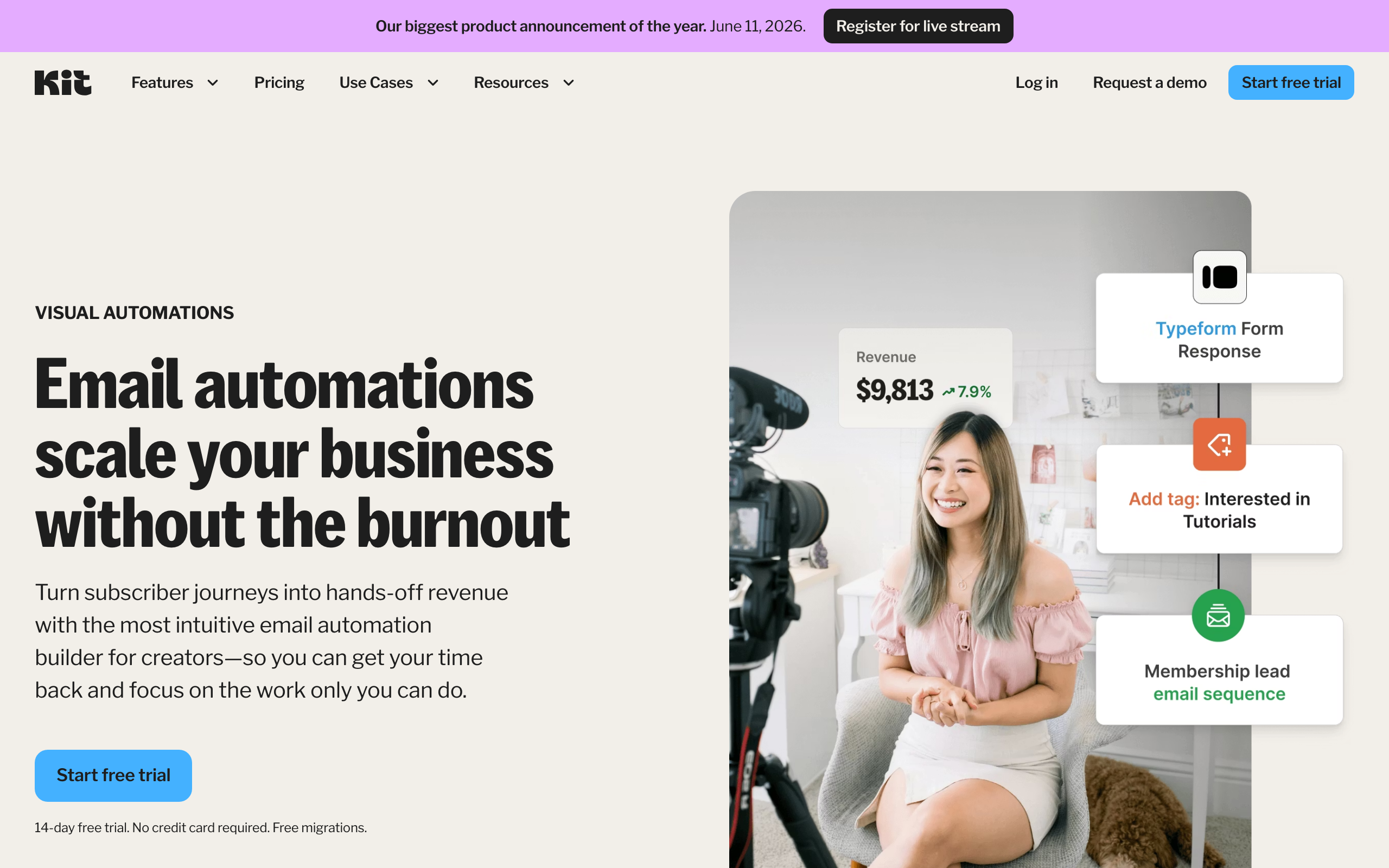
ConvertKit is designed specifically for the creator economy. Its features are tailored to help creators grow their audience and sell digital products. It excels at segmentation and tagging, allowing for highly personalized email marketing. Its philosophy is subscriber-centric rather than list-centric, which is a powerful way to manage your audience.
Key Strengths:
Potential Weaknesses:
Best for: Marketing agencies that manage campaigns for multiple clients and want a white-label solution.
GoHighLevel is a unique entry on this list. It’s an all-in-one sales and marketing platform built specifically for agencies. It bundles a huge number of tools—CRM, email, SMS, funnels, call tracking, and more—into a single subscription that agencies can then rebrand and sell to their clients. For a single business, it’s likely overkill, but for an agency, it can replace a dozen different software subscriptions.
Key Strengths:
Potential Weaknesses:
Selecting the right platform depends entirely on your unique circumstances. Here’s a simple framework to guide your decision:
Ultimately, the goal is to find a tool that empowers your marketing efforts, not one that complicates them. Many teams are moving towards a more modern, agile stack where specialized tools are orchestrated to achieve specific goals, a concept central to autonomous campaign execution.
For teams looking to streamline their entire marketing process from strategy to execution, a platform like Lyra can help. By automating campaign planning and content creation, Lyra complements these marketing hubs, allowing you to focus on high-level strategy. You can join the waitlist to learn more about building an autonomous marketing engine.
For most startups, Brevo (formerly Sendinblue) offers the best free alternative. Its free plan includes unlimited contacts, up to 300 emails per day, marketing automation, and even a basic CRM, providing incredible value at no cost.
Yes, migrating your data is generally straightforward. You can export your contacts, companies, and deals from HubSpot as CSV files. Most alternative platforms have a built-in import tool that allows you to upload these files and map the data to the correct fields in their system.
Most of the top alternatives, including ActiveCampaign and Brevo, come with an integrated CRM. While they may not have the full feature depth of HubSpot’s Sales Hub, their CRMs are more than sufficient for most small and medium-sized businesses to manage leads and sales pipelines effectively.
Absolutely. For larger enterprises with dedicated marketing teams, significant budgets, and a need for a deeply integrated, all-in-one solution, HubSpot remains an excellent choice. Its power lies in its ability to unify marketing, sales, and service data in one place for complex organizations.