AI Marketing Agent Insights for Modern Growth Teams
MeetLyra Journal covers AI marketing agents, SEO automation, content systems, and the shift from manual marketing execution to autonomous workflows.
MeetLyra Journal covers AI marketing agents, SEO automation, content systems, and the shift from manual marketing execution to autonomous workflows.


Tired of chasing rankings? Learn how generative engine optimization GEO tools can make your content the direct source for AI answers in Google's AI.
Generative Engine Optimization (GEO) involves optimizing content to be discovered, understood, and directly cited by AI-powered answer engines like Google’s AI Overviews and Perplexity. Unlike traditional SEO, which aims to rank a webpage link, GEO focuses on making your content the authoritative source for AI-generated answers. Consequently, using the right generative engine optimization tools is crucial for this strategic shift. These tools move beyond simple keyword tracking to ensure your brand’s expertise is embedded in the new search landscape, forming a key part of the best ai content automation strategy for modern businesses.
For founders and lean marketing teams, this represents a fundamental change in how customers discover and trust your brand. In short, a successful GEO strategy means your content directly answers user questions within the search results themselves. This establishes your authority and captures high-intent traffic before a user even needs to click a link. This guide explores the essential tools and strategies to help you win in the age of AI-driven search.
Generative Engine Optimization (GEO) is the next evolution of search. If traditional SEO is about getting your website listed in a library’s card catalog, GEO is about getting your specific data and insights quoted directly in the encyclopedia. It’s a profound shift from visibility to direct contribution.
Specifically, GEO involves structuring your content so that Large Language Models (LLMs) can easily parse, verify, and synthesize it into concise, accurate answers for users. This process extends far beyond keywords and backlinks, focusing instead on four core pillars:
Ultimately, the goal is no longer just to be one of the ten blue links. The goal is to be the answer. This is a critical distinction for any business that relies on organic search for growth. Building an autonomous SEO content engine today requires a GEO-first mindset.
This workflow follows Google Search Central guidance: useful, original, people-first content matters more than whether AI helped create the first draft.
The rise of AI-native search interfaces, most notably Google’s AI Overviews, is not a future trend—it’s the present reality. These systems prioritize providing direct answers over lists of links, which fundamentally changes the user’s journey. For startups and founders, ignoring this shift is a significant risk.
Firstly, GEO is the primary defense against the “zero-click search” phenomenon. When a user gets a complete answer at the top of the results page, their motivation to click through to a website diminishes. However, if your brand is the cited source for that answer, you still win. You gain brand exposure, build trust, and position your company as the go-to authority in your niche.
Secondly, being cited by an AI engine is a powerful form of social proof. It acts as an implicit endorsement from a platform like Google, signaling to users that your information is credible and trustworthy. This can be more valuable than a #1 ranking, as it builds brand equity directly within the search experience.
Finally, a proactive GEO strategy allows you to control your brand’s narrative in the AI space. By providing clear, well-structured, and accurate information, you ensure that AI models represent your products, services, and expertise correctly. Without this, you risk letting competitors or incorrect third-party data define your brand in these new answer engines.
generative engine optimization tools works best when it turns strategy into a repeatable publishing system, not just another drafting shortcut.
SEO Machine quality gate
As GEO becomes a core marketing function, a new category of software is emerging to automate and scale these efforts. When evaluating generative engine optimization tools, you should look for features that specifically address the needs of AI crawlers and answer engines. Here are the most important capabilities to consider.
Modern GEO tools go beyond simple keyword density. They use Natural Language Processing (NLP) to analyze your content and identify the key entities (people, organizations, concepts) and the relationships between them. This helps you ensure your content’s context is clear to an AI.
For example, a tool might recognize that when you write about “Jaguar,” you are referring to the car brand, not the animal, because of its proximity to entities like “engine,” “luxury vehicle,” and “dealership.” This contextual understanding is precisely what LLMs need to generate accurate answers.
| Workflow | Manual SEO | Agentic SEO |
|---|---|---|
| Research | Spreadsheet-led and slow | Scored opportunities |
| Drafting | One-off briefs | Context-aware generation |
| Optimization | Manual plugin checks | Pre-publish quality gate |
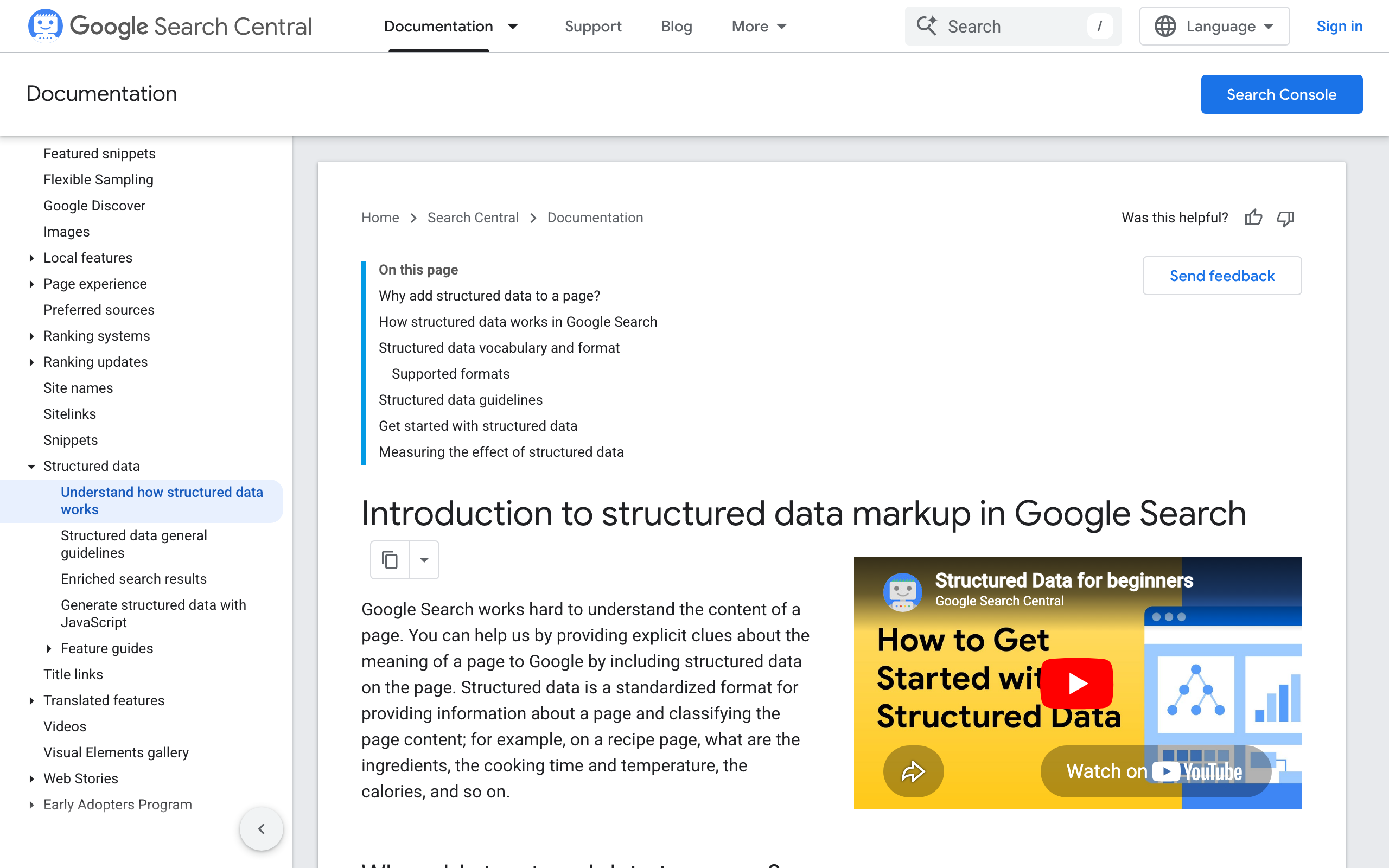
Schema markup is a vocabulary of tags that you can add to your HTML to improve the way search engines read and represent your page. It’s like creating a name tag for every piece of information on your site. For GEO, this is non-negotiable.
Leading tools can automatically scan your content and generate the appropriate JSON-LD schema. For instance, they can identify an FAQ section and wrap it in `FAQPage` schema, or recognize an author’s name and apply `Person` schema. This automation saves countless hours and reduces the risk of human error, making your content perfectly machine-readable.
The most advanced GEO platforms can now score your content on its “citability.” They analyze sentence structure, factual density, and clarity to predict how likely a specific statement is to be used as a source for an AI-generated answer. These tools often encourage you to write short, declarative sentences packed with verifiable facts.
In addition, some tools are beginning to incorporate fact-checking features. They can cross-reference claims in your content against established knowledge bases to flag potential inaccuracies. Since AI engines are heavily penalized for providing incorrect information, they prioritize sources that demonstrate a commitment to factual accuracy.
It automates opportunity research, content creation, on-page optimization, publishing preparation, and monitoring.
No. It handles repeatable execution so humans can focus on positioning, evidence, and quality control.
Instead of just guessing, some generative engine optimization tools can simulate how an AI might answer a specific query using your content. These simulators provide a preview of what a generative snippet might look like, allowing you to refine your content until it produces the desired output.
Furthermore, these tools analyze the current AI-powered SERPs (Search Engine Results Pages) for your target queries. They identify which competitors are being cited, what types of information are being prioritized, and where the gaps are. This analysis is crucial for developing a content strategy that effectively targets answer engine results.
While no single tool is a perfect GEO solution yet, several existing platforms offer features that are essential for an effective strategy. Here’s a look at some of the best options available today.
InLinks is a pioneer in entity-based SEO, which is a core component of Generative Engine Optimization. The platform excels at identifying key entities within your content and building a comprehensive knowledge graph for your website.

Clearscope is a content optimization tool that focuses on helping you create comprehensive, expert-level content that covers a topic in-depth. Its approach aligns perfectly with GEO’s need for authoritative and citable information.
Lyra represents the next step: an autonomous system designed for end-to-end content marketing. It integrates GEO principles directly into an automated workflow, from opportunity discovery to optimized publishing.
Having the right tools is only half the battle. You also need a clear, repeatable process. Here is a step-by-step guide to building a GEO strategy that gets results.